MAINTENANCE & FACILITY MANAGEMENT
PPM vs Predictive Maintenance: What’s the Difference?
Effective maintenance is essential for keeping buildings, equipment and critical facility systems operating safely and efficiently. Two commonly used maintenance strategies are Planned Preventive Maintenance (PPM) and Predictive Maintenance. Although both approaches aim to reduce equipment failures and improve reliability, they work in different ways.
Understanding the difference between PPM and Predictive Maintenance can help facility managers and engineering teams select the right strategy for their equipment, operational requirements and maintenance objectives.
What is Planned Preventive Maintenance (PPM)?
Planned Preventive Maintenance, commonly known as PPM, involves carrying out maintenance activities at scheduled intervals before equipment develops a major fault. The maintenance schedule is usually based on time, operating hours, manufacturer recommendations or established maintenance procedures.
The main purpose of PPM is to identify and address potential problems before they result in unexpected equipment failure or operational disruption.
Common PPM Activities
- Routine equipment inspections
- Cleaning and lubrication
- Filter replacement
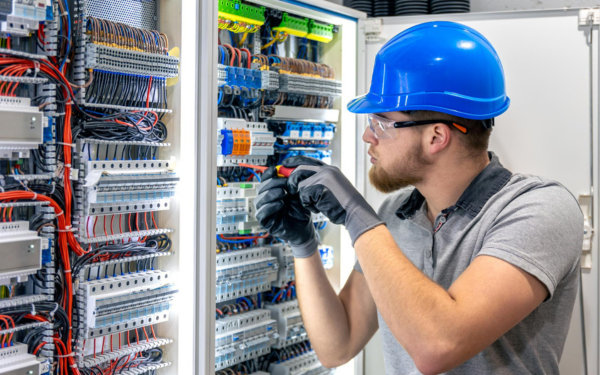
- Electrical and mechanical checks
- Scheduled component replacement
- HVAC system servicing
- Pump and motor inspections
- Safety system testing
What is Predictive Maintenance?
Predictive Maintenance uses equipment condition and performance data to determine when maintenance is actually required. Instead of relying only on fixed maintenance schedules, engineers monitor the condition of equipment and look for early signs of deterioration or potential failure.
Depending on the equipment and application, predictive maintenance can use sensors, monitoring systems, temperature measurements, vibration analysis, electrical readings and other performance indicators.
Common Predictive Maintenance Techniques
- Vibration monitoring
- Temperature monitoring
- Electrical condition monitoring
- Oil and lubricant analysis
- Equipment performance monitoring
- Pressure and flow monitoring
- Thermal inspection
- Condition-based equipment assessment
PPM vs Predictive Maintenance
The key difference between the two approaches is how maintenance decisions are made. PPM follows a predefined maintenance schedule, while Predictive Maintenance uses equipment condition and performance information to determine when maintenance should be performed.
- PPM: Maintenance is performed at predetermined intervals.
- Predictive Maintenance: Maintenance is performed based on the actual condition and performance of equipment.
- PPM: Relatively simple to plan and manage.
- Predictive Maintenance: Requires monitoring, data collection and technical analysis.
- PPM: Helps prevent common failures through regular servicing and inspection.
- Predictive Maintenance: Helps identify developing faults before they become serious failures.
Key Differences at a Glance
- Maintenance Trigger: PPM uses time or usage intervals, while Predictive Maintenance uses equipment condition and performance.
- Planning: PPM follows a predetermined schedule, whereas Predictive Maintenance is planned according to equipment data.
- Monitoring: PPM relies primarily on scheduled inspections, while Predictive Maintenance involves continuous or periodic condition monitoring.
- Technology: PPM can be managed with standard maintenance procedures, while Predictive Maintenance may require sensors, monitoring systems and analytical tools.
- Maintenance Optimization: Predictive Maintenance can help reduce unnecessary maintenance by identifying when intervention is actually required.
Benefits of Planned Preventive Maintenance
PPM remains an important maintenance strategy for many facilities because it is structured, predictable and relatively straightforward to implement.
- Reduces the likelihood of unexpected failures
- Provides a clear maintenance schedule
- Supports regular equipment inspections
- Helps maintain equipment in good operating condition
- Supports manufacturer-recommended servicing
- Improves maintenance planning and resource allocation
- Helps extend equipment operating life
Benefits of Predictive Maintenance
Predictive Maintenance provides a more condition-focused approach by using equipment data to identify potential problems before they develop into major failures.
- Early identification of developing equipment faults
- Reduced unexpected equipment downtime
- Better maintenance decision-making
- Improved equipment reliability
- Potential reduction in unnecessary maintenance
- Improved asset performance monitoring
- Better understanding of equipment condition
Which Maintenance Strategy Should You Choose?
There is no single maintenance strategy that is suitable for every facility or piece of equipment. The right approach depends on equipment criticality, operating conditions, maintenance requirements, available technology and the potential impact of equipment failure.
For many facilities, the most effective solution is a combination of PPM and Predictive Maintenance. Routine preventive maintenance can be used for regular servicing and inspections, while condition monitoring can be applied to critical equipment where early fault detection provides additional value.
- Use PPM for routine and scheduled servicing.
- Use Predictive Maintenance for critical equipment requiring condition monitoring.
- Combine both approaches to create a comprehensive maintenance program.
- Review maintenance data regularly to improve maintenance planning.
Applying PPM and Predictive Maintenance to MEP Systems
In MEP and facility environments, both maintenance strategies can play an important role in maintaining critical systems. HVAC equipment, pumps, electrical systems, water networks and other mechanical equipment can benefit from regular preventive maintenance combined with condition-based monitoring where appropriate.
A well-structured maintenance program helps facility teams identify potential issues early, improve equipment reliability and reduce operational interruptions.
- HVAC and air-conditioning systems
- Chillers and cooling equipment
- Pumps and motors
- Electrical panels and equipment
- Water supply and distribution systems
- Plant room equipment
- Ventilation systems
- Critical mechanical equipment
Building a Smarter Maintenance Strategy
Planned Preventive Maintenance and Predictive Maintenance are both valuable approaches for improving equipment reliability and facility performance. While PPM provides a structured schedule for routine maintenance, Predictive Maintenance uses equipment condition and performance data to determine when maintenance may be required.
By combining the strengths of both approaches, organizations can develop a balanced maintenance strategy that supports safety, reliability, efficiency and long-term asset performance.
Keep Your Facility Running Reliably
Professional maintenance planning can help reduce equipment failures, improve system performance and support uninterrupted facility operations. With the right preventive and predictive maintenance strategy, critical MEP systems can be maintained more efficiently throughout their operational lifecycle.