



Fire Systems: Protecting People, Property and Critical Infrastructure
Category: Fire & Life Safety Systems
Introduction
Fire safety is an essential part of modern building design and facility management. A properly designed fire protection system helps detect fire at an early stage, alert occupants, control the spread of fire, and support safe evacuation.
Fire systems combine detection, alarm, suppression, firefighting, emergency communication, and smoke management technologies. These systems are designed to work together to protect people, property, equipment, and business operations during a fire emergency.
What Are Fire Systems?
Fire systems are a collection of equipment and technologies used to detect, control, suppress, and manage fire-related risks within a building or facility.
Depending on the type and purpose of a building, fire protection systems may include fire detection and alarm systems, fire sprinkler systems, fire hydrants, fire pumps, extinguishers, emergency lighting, smoke control systems, and fire suppression systems.
Importance of Fire Protection Systems
Fire protection systems provide an important layer of safety for building occupants and assets. Early detection and effective response can help reduce the impact of a fire and provide occupants with valuable time to evacuate.
- Protects occupants and visitors
- Provides early fire detection
- Alerts people during emergencies
- Helps control and suppress fires
- Reduces potential property damage
- Protects critical equipment and infrastructure
- Supports emergency response operations
- Improves overall building safety
Main Components of Fire Systems
1. Fire Detection Systems
Fire detection systems are designed to identify signs of fire such as smoke, heat, or flames. Smoke detectors, heat detectors, flame detectors, and other sensing devices can send signals to a fire alarm control panel when a potential fire is detected.
2. Fire Alarm Systems
Fire alarm systems notify building occupants and responsible personnel when a fire or fire-related event is detected. Alarm systems may include control panels, sounders, strobes, manual call points, voice evacuation systems, and monitoring equipment.
3. Fire Sprinkler Systems
Automatic sprinkler systems are designed to discharge water when heat activates individual sprinkler heads. Sprinkler systems can help control or suppress a developing fire and limit its spread.
4. Fire Hydrant Systems
Fire hydrant systems provide water for firefighting operations. Depending on the building design, the system may include hydrant outlets, hose reels, piping, valves, pumps, and water storage facilities.
5. Fire Pumps
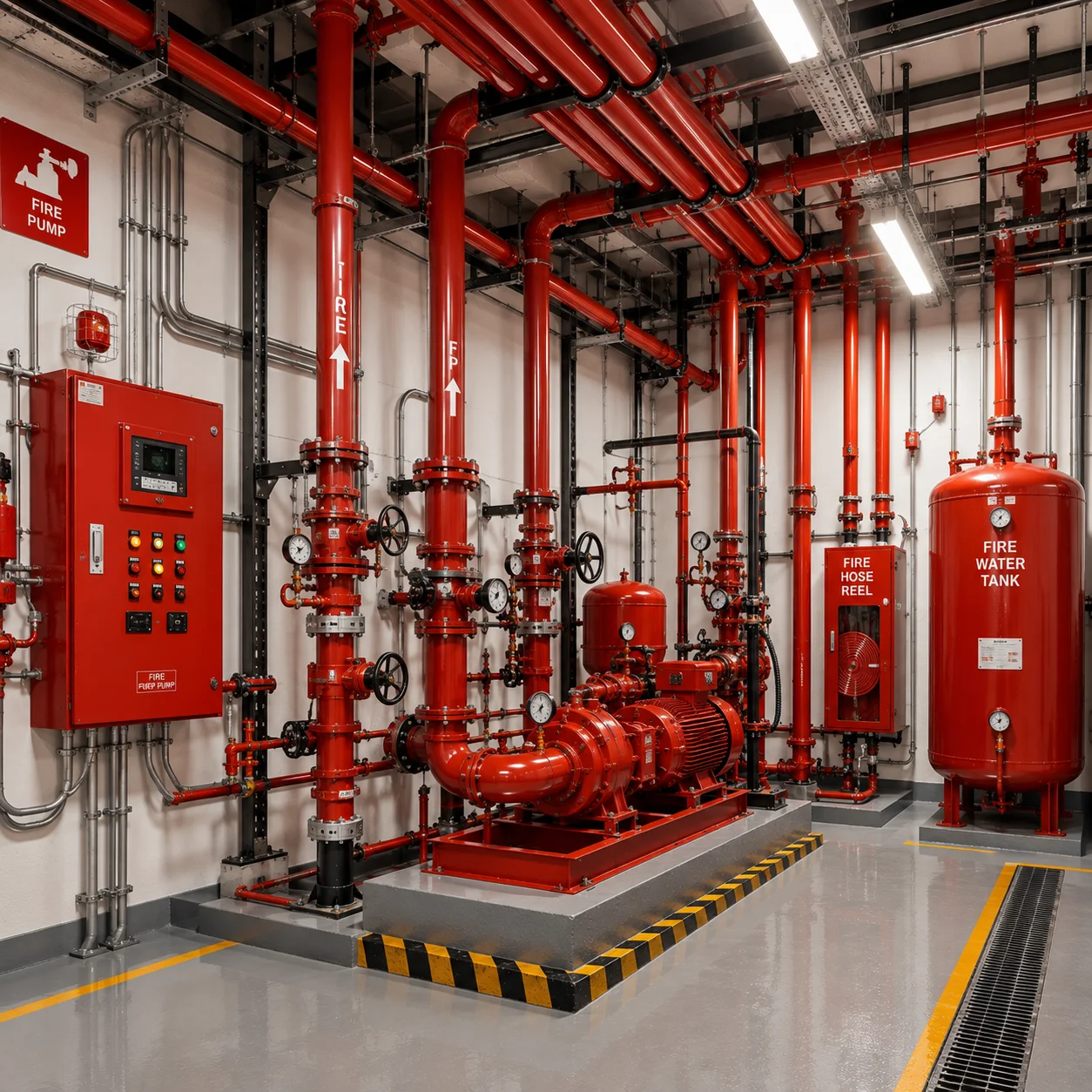
Fire pumps provide the required water flow and pressure for firefighting systems such as sprinklers and hydrants. Pump rooms may include main fire pumps, standby pumps, jockey pumps, controllers, valves, and associated equipment.
6. Fire Extinguishers
Portable fire extinguishers provide a first-response method for dealing with small fires. Different types of extinguishers are suitable for different fire hazards, so appropriate selection, placement, inspection, and maintenance are important.
7. Smoke Control Systems
Smoke control systems help manage smoke movement within a building during a fire. Depending on the building design, these systems may include smoke extraction, pressurization, dampers, fans, and associated control systems.
Fire Detection and Alarm Systems
Fire detection and alarm systems are an important part of fire safety because they can provide early warning of a potential fire. Detectors installed throughout a building continuously monitor designated areas.
When a detector or manual call point is activated, the fire alarm control panel processes the signal and activates appropriate alarm devices. Advanced systems may also transmit alarm information to a central monitoring or building management system.
Fire Sprinkler Systems
Automatic fire sprinkler systems are commonly used in commercial, industrial, residential, and institutional buildings. Sprinkler heads are connected to a pressurized water distribution network.
When sufficient heat reaches a sprinkler head, its heat-sensitive element activates and allows water to discharge onto the affected area. Proper system design and maintenance are essential for reliable performance.
Fire Water Storage and Distribution
Reliable water availability is essential for water-based firefighting systems. Fire water storage tanks and distribution networks are designed to provide the required water supply for connected fire protection systems.
Fire pumps, valves, pipework, hydrants, hose reels, and sprinkler systems must be properly coordinated to ensure that water can be delivered where it is required during an emergency.
Fire System Design
Fire system design begins with understanding the building layout, occupancy, fire hazards, building use, construction characteristics, and applicable fire safety requirements.
Engineers consider factors such as fire detection coverage, sprinkler protection, water demand, pump capacity, emergency access, alarm notification, evacuation routes, and smoke control.
- Assessment of fire hazards
- Selection of suitable detection systems
- Fire alarm system planning
- Sprinkler system design
- Fire hydrant and hose reel design
- Fire pump and water storage planning
- Smoke management planning
- Emergency communication systems
- Access for inspection and maintenance
Fire System Testing and Maintenance
Regular inspection, testing, and maintenance are essential to ensure that fire protection systems remain operational when they are needed. A system that is not properly maintained may fail to provide the expected level of protection during an emergency.
Fire Alarm Testing
Fire alarm devices, control panels, detectors, manual call points, sounders, visual indicators, and backup power systems should be inspected and tested according to applicable requirements.
Sprinkler System Inspection
Sprinkler systems require regular inspection of sprinkler heads, valves, pipework, water supply, alarm devices, and associated equipment.
Fire Pump Maintenance
Fire pumps should be regularly inspected and tested to verify their operational readiness. Pump controllers, valves, pressure conditions, and associated equipment should also be checked.
Fire Extinguisher Inspection
Portable fire extinguishers should be positioned correctly, clearly identified, accessible, and maintained in accordance with applicable requirements.
Fire Safety and Emergency Preparedness
Fire protection equipment is only one part of an effective fire safety strategy. Buildings should also have appropriate emergency procedures, evacuation plans, signage, emergency lighting, and trained personnel.
Regular emergency drills and staff training can help occupants understand how to respond during a fire emergency and how to use available emergency systems safely.
Fire Systems and Building Management
Modern buildings can integrate fire alarm systems with other building services to coordinate emergency responses. Depending on the system design, fire alarms may initiate predefined actions such as equipment shutdown, smoke control operation, elevator control, or emergency notifications.
Integration must be carefully designed and maintained so that safety-critical functions operate reliably during emergency conditions.
Benefits of Professional Fire System Engineering
- Improved fire detection
- Faster emergency notification
- Improved occupant safety
- Better fire control and suppression
- Reduced potential property damage
- Protection of critical infrastructure
- Improved emergency preparedness
- Reliable system performance
- Better overall building safety
Future of Fire Protection Systems
Fire protection technology is increasingly incorporating smart sensors, advanced detection systems, remote monitoring, automated diagnostics, and intelligent building integration.
These technologies can help building operators identify system faults, monitor equipment status, improve maintenance planning, and respond more effectively to potential fire emergencies.
Conclusion
Fire systems are a critical part of modern building safety. Detection, alarm, sprinkler, hydrant, suppression, smoke control, and emergency communication systems work together to provide protection against fire-related risks.
Proper engineering, installation, testing, inspection, and maintenance are essential to ensure that fire protection systems remain reliable and effective throughout the life of a building.
Investing in professional fire system engineering helps create safer buildings, protect valuable assets, and improve preparedness for fire emergencies.